
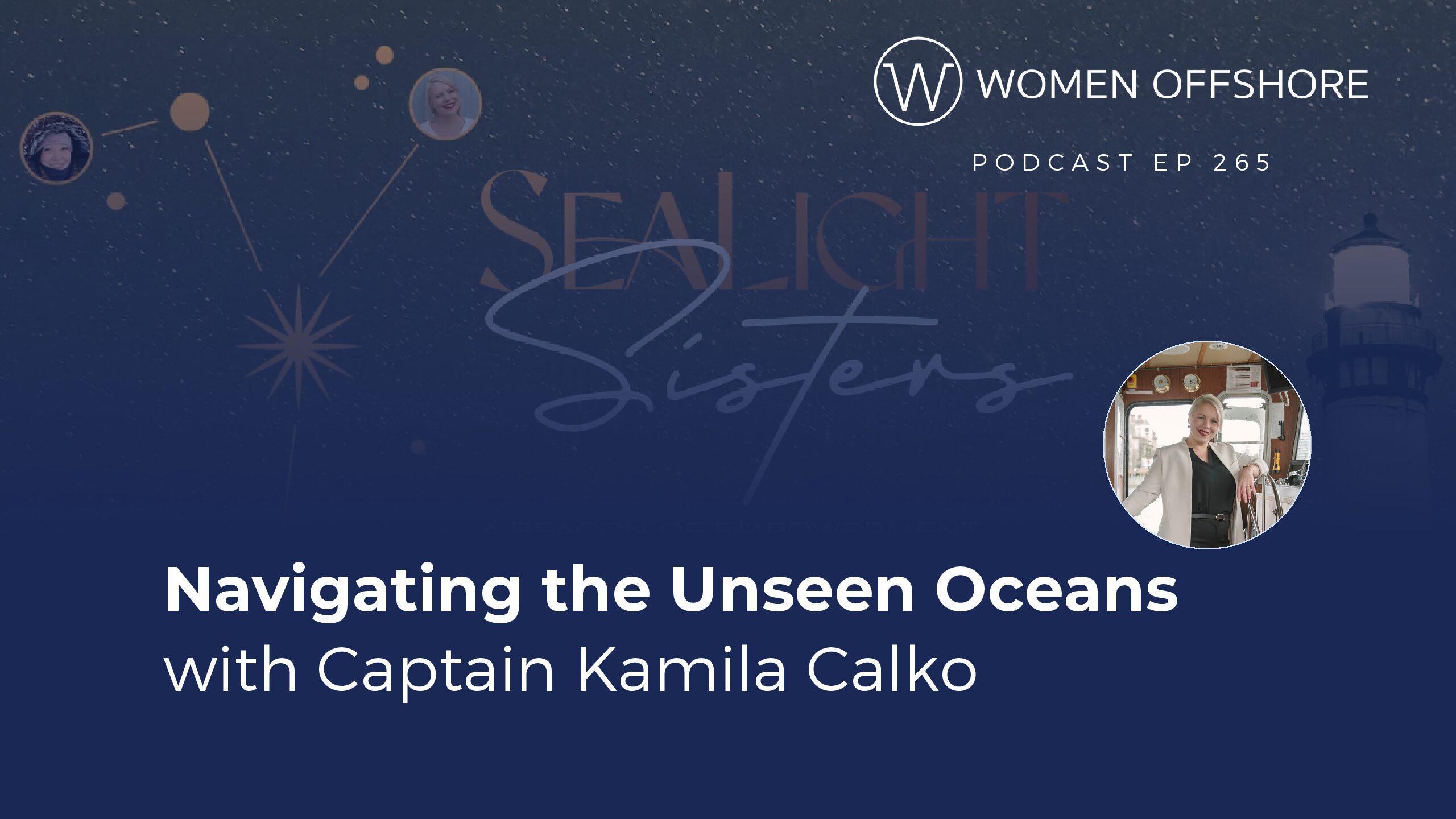
A career at sea can challenge a mariner in ways that go far beyond the physical demands of the job.
For Captain Kamila Calko, MNI, those challenges became the foundation for a career spanning more than two decades and, eventually, a new chapter focused on supporting others in the maritime industry.
In Episode 265 of the Women Offshore Podcast, Kamila shares the story of how she went from having no seafaring background to becoming a captain and one of the most experienced women in her field.
When Kamila applied to become a ship’s captain at 19, she had never driven a car and had no previous experience at sea. She began by taking the helm of a Toronto tour boat and continued building her experience from there.
Over the following two decades, she worked aboard more than 30 vessels across a range of commercial and government operations. Her experience included BC Coast tugboats, Canadian Coast Guard icebreakers, and passenger ro-ro ferries.
She also became the first and only woman to qualify for the Pacific Pilotage Authority’s exams, an achievement that required significant preparation and determination. Her path included navigating challenging conditions, including climbing pilot ladders in 40-knot winter winds while five months pregnant.
But technical qualifications were only part of Kamila’s experience.
As her career progressed, she became increasingly aware of the less visible challenges facing women working at sea. The expectations placed on women to constantly prove themselves, combined with shipboard cultures that were not always designed to support them, could have a lasting impact on careers and well-being.
Rather than stepping away from maritime altogether, Kamila chose to use her experience to address some of those challenges.
Today, she leads SeaLight and SeaLight Sisters, organizations focused on providing support and advocacy for women and gender-diverse seafarers. Her work includes trauma-informed counselling, legal literacy support, and advocacy for people navigating difficult situations within the maritime industry.
Kamila’s work also highlights an important part of career development that is sometimes overlooked: having access to support when things become difficult.
Technical skills, licenses, and sea time are essential to a maritime career, but so are trusted relationships, professional networks, and resources that help mariners navigate challenges throughout their careers.
As a 2025 Marine Log Top Women in Maritime honouree, Kamila continues to use her experience and technical authority to advocate for a stronger support system within the industry.
Her story is not simply about becoming a captain. It is about what she learned along the way and how those experiences shaped the work she is doing today.
For maritime professionals at any stage of their careers, this conversation offers an honest perspective on leadership, resilience, safety, and the importance of building a community where mariners do not have to navigate the unseen challenges alone.




Recent Comments