
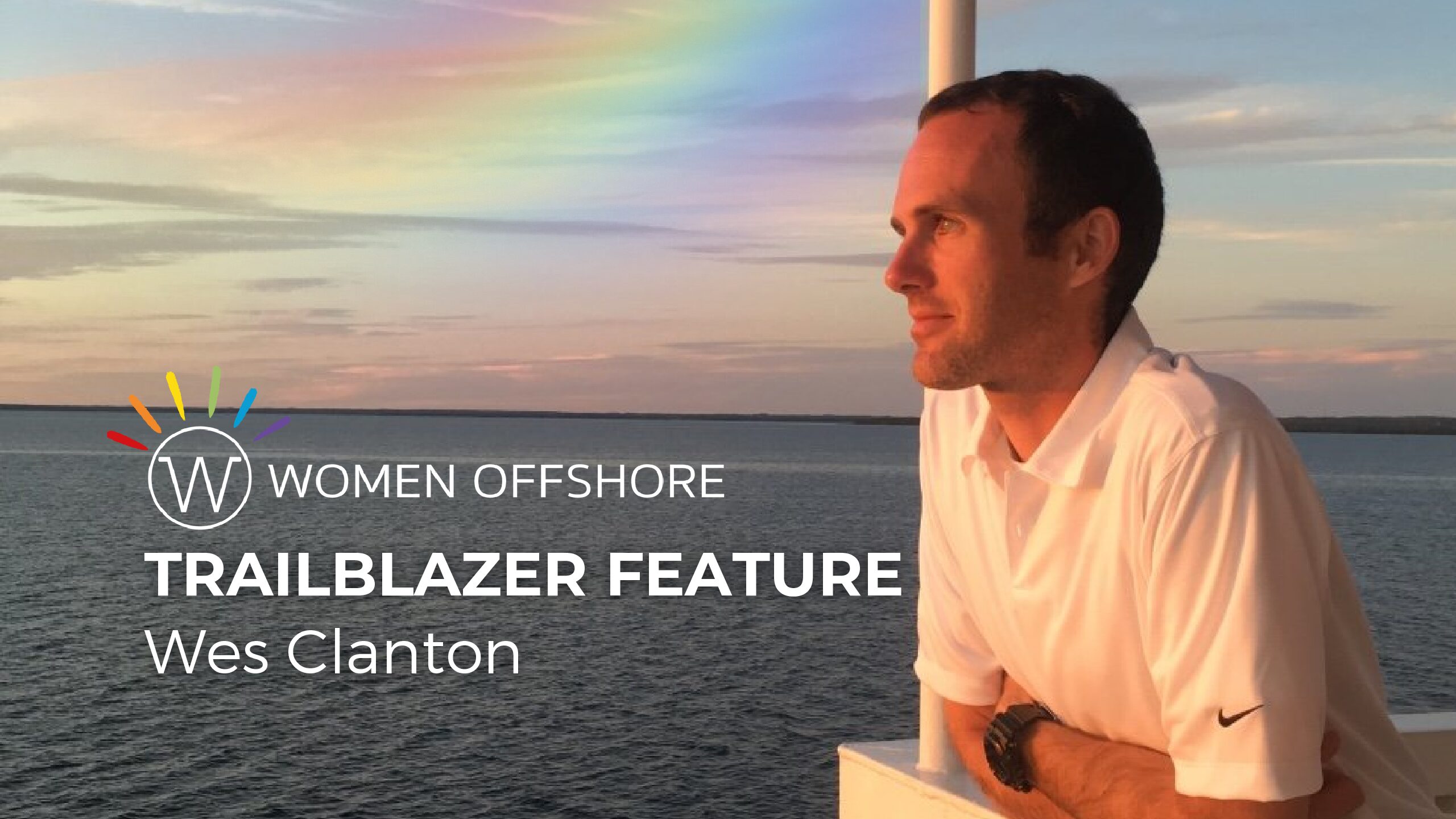
Every mariner’s path into the industry is different.
Some grow up around ports and vessels. Others discover maritime careers later in life, often by chance. For Wes Clanton, the journey began with a love of the water and a desire to try something new.
Today, Wes serves as Director of Global Procurement for Airframe Maintenance and New Interior Cabin Programs at United Airlines. Before leading sourcing strategy for one of the world’s largest airlines, he spent several years sailing as a licensed mariner and later moved into fleet operations leadership, consulting, and transportation strategy.
His career has taken him from the bridge of a ship in the middle of the night to the boardrooms of major transportation organizations. Along the way, he learned lessons about leadership, visibility, and belonging that continue to shape his perspective today.
Finding a Career on the Water
Growing up in Tennessee, Wes never imagined a maritime career was an option.
After college, he moved to Alaska and later settled in Seattle, where he worked for the American Cancer Society. It was there that a sailing class on a wooden boat introduced him to a completely new world.
What started as a hobby quickly became a passion.
Soon, he was spending several days each week racing and cruising throughout Puget Sound. While recreational sailing looked very different from professional maritime work, he found himself increasingly drawn to the industry.
“I didn’t know a maritime career was a real option,” Wes shared. “Then one weekend after a cruise, I started researching what it would actually take.”
That search led him to Great Lakes Maritime Academy, where he earned his mariner’s license and began a new chapter of his career.
Navigating Life at Sea
For Wes, learning to navigate a career at sea involved more than mastering vessel operations and bridge standing watch.
As a member of the LGBTQ+ community, he spent years carefully managing how much of himself he shared professionally.
Life onboard creates a unique environment. Mariners spend long hours together, often working closely with the same small group of people for weeks or months at a time. Conversations that might never happen in a traditional office become commonplace during overnight watches and long transits.
“You spend hours alone with one other person on a quiet bridge in the middle of the night with nothing to do but talk,” he explained.
For years, Wes found himself avoiding pronouns and keeping parts of his personal life private.
One experience remains especially memorable. While anchored in San Francisco during Pride Month, a casual comment from another crew member served as a reminder that not everyone felt safe bringing their full selves to work.
“It wasn’t dramatic,” he recalled. “That was the point.”
Like many moments that influence workplace culture, it was subtle. Yet it reinforced a message many LGBTQ+ professionals understand well: sometimes silence feels safer than visibility.
The Power of Being Seen
As Wes transitioned ashore into fleet operations leadership, he began to take on a more active role supporting employee resource groups and creating spaces where others could feel supported.
The turning point came unexpectedly.
While participating in a company panel discussion about living authentically, Wes shared publicly that he was gay.
The moment wasn’t planned.
But the impact was immediate.
“I walked back to my office feeling almost giddy, like something physical had lifted off my shoulders,” he said.
From that point forward, he became passionate about helping create workplaces where others could experience that same sense of freedom and belonging.
What Pride Means in Maritime
For Wes, Pride Month is about visibility.
Not visibility for visibility’s sake, but visibility for the people who may not yet feel comfortable being seen.
One of his proudest moments came in 2020 while working in fleet operations. Inspired by the company’s long-standing tradition of raising a large American flag aboard vessels during patriotic holidays, he proposed doing something similar for Pride Month.
The result was a massive Pride flag flown from the crane of the Polar Enterprise while anchored in San Francisco Bay.
The gesture was visible from both the water and the shore.
But for Wes, the meaning extended far beyond the flag itself.
“It wasn’t really about whether there was another queer person aboard that ship,” he explained. “It was the company saying, in a way that couldn’t be missed, that your voice matters here and you deserve to be heard.”
That message resonates far beyond the LGBTQ+ community.
Whether someone is entering a male-dominated field, bringing a different perspective to the engine room, or navigating a career path that doesn’t look like everyone else’s, belonging matters.
Why Representation Matters
When asked what representation means in maritime, Wes doesn’t talk about numbers.
He talks about people.
He talks about the next mariner standing watch at 2 a.m. who shouldn’t have to spend years hiding parts of themselves in order to feel accepted.
“Representation isn’t just about who’s visibly present,” he said. “It’s about whether the environment makes it safe to be visible at all.”
That distinction is important.
The maritime industry continues to evolve. More companies are creating environments where people can bring their full selves to work. More leaders are speaking openly about their experiences. More professionals are finding community and support within the industry.
Progress doesn’t always happen through a single bold moment.
Sometimes it happens through everyday actions, conversations, and decisions that make someone feel like they belong.
Advice for the Next Generation
Looking back, Wes encourages others to take opportunities before they feel completely ready.
Whether that means pursuing a new career, moving into a leadership role, returning to school, or simply being more authentic about who they are, growth often happens on the other side of uncertainty.
The same principle guided his maritime career.
And it’s a lesson that continues to serve him today.
“Be authentic to who you are, and take the leap before you feel fully ready for it.”
For the next generation of maritime professionals, that may be some of the most valuable advice of all.
Related posts:
 What Nearly 20 Years in Recruiting Can Teach Us About Building Careers
 From Kindergarten to Pilotage: Two Mariners, One Goal, and a Career Built on Persistence
 Maritime Action Plan: What It Means for the Future of Maritime Careers
 From Cadet to Chief Mate: How Max Kantor Is Navigating Leadership, Integrity, and Life at Sea
 Steady Success of Christalove Agyin-Ayetse

Recent Comments